Crystal Cave
The Crystal Cave (Grotte aux Cristaux) is a remarkable underground cavity hidden in the Fontainebleau Forest in the Seine-et-Marne department of the Île-de-France region, less than an hour from Paris.
Located near the Mont-Saint-Germain area, at about 144 meters above sea level, the cave is known for its rare natural quartz crystallizations that shimmer across its sandstone walls. Though relatively small, it is considered one of the most unusual geological curiosities of the Fontainebleau massif.
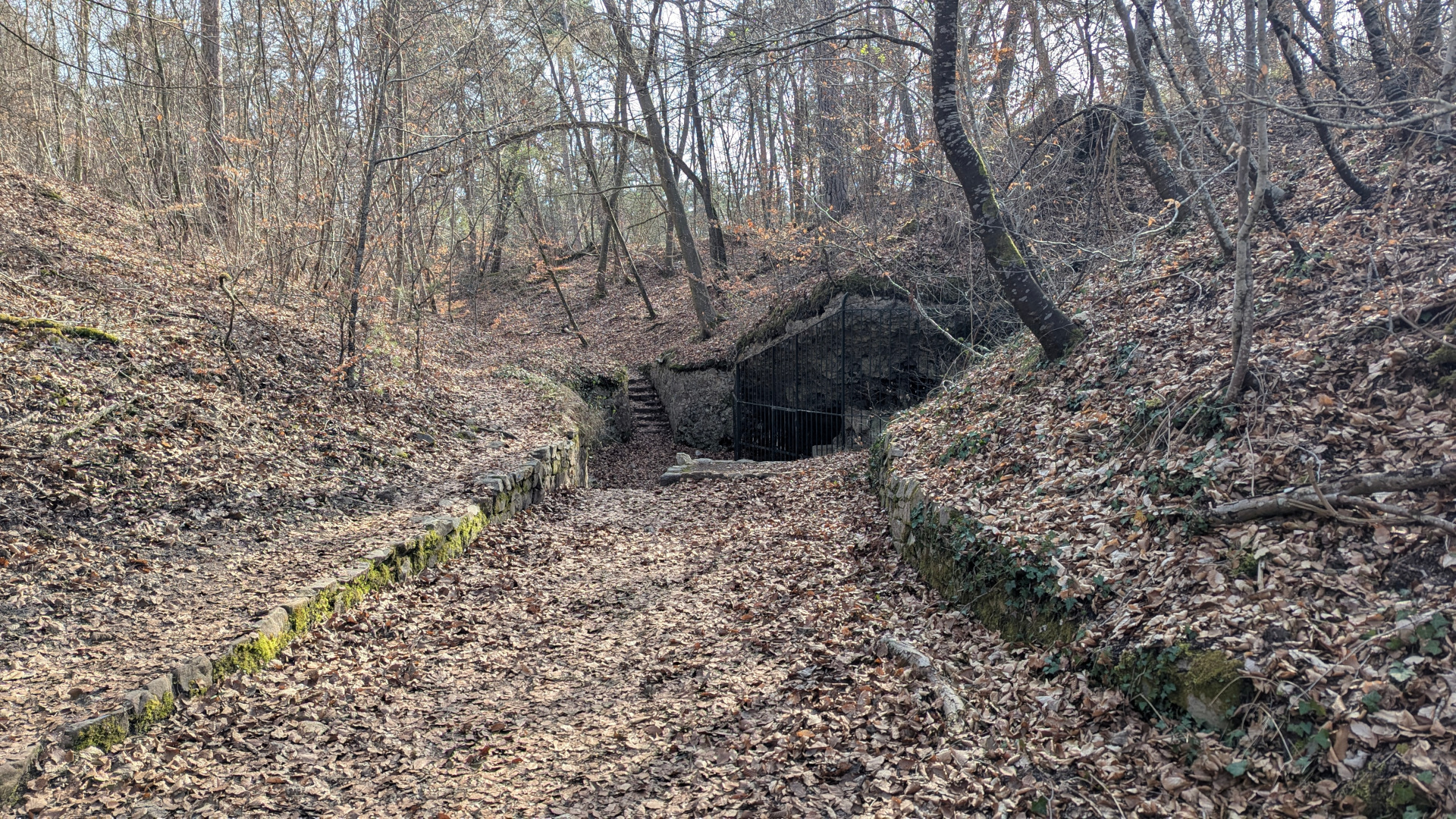
Today, the cave is protected by a metal gate. Visitors can see the entrance and glimpse the crystals inside, but access to the interior is restricted to preserve this fragile natural heritage.
Table of Contents
Location
The Crystal Cave lies in the northern part of the Fontainebleau Forest, near the Route Ronde and Mont-Saint-Germain rock formations.
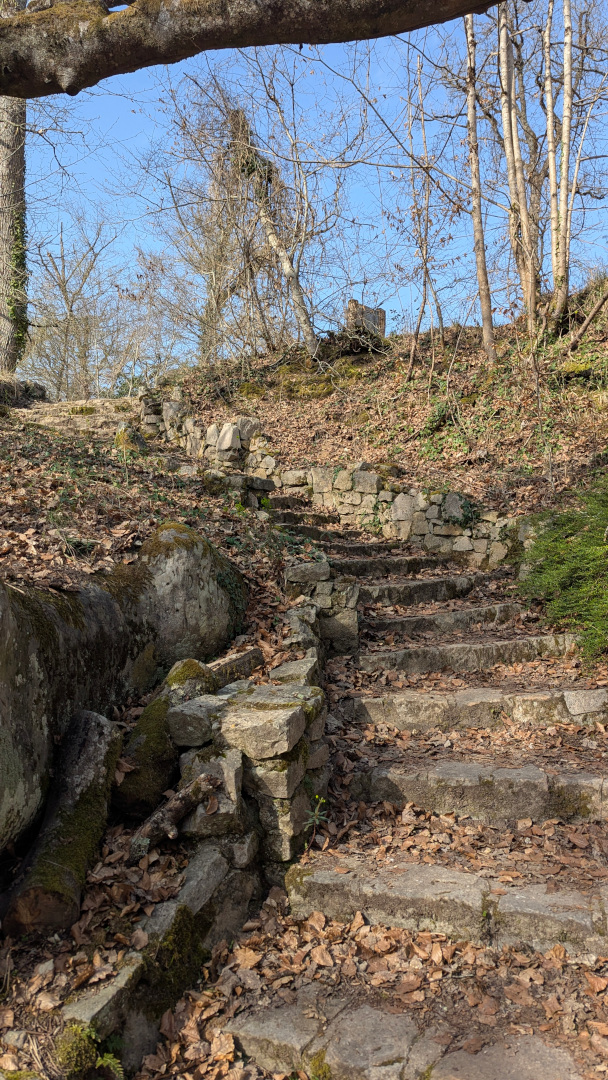
The surrounding landscape is typical of the forest: sandy paths, large sandstone boulders, and wooded trails that attract hikers, trail runners, and bouldering climbers. The cave is often encountered along walking routes that explore this part of the forest.
Geological Features
Unlike classic limestone caves with large stalactites, the Crystal Cave formed in the sandstone of the Fontainebleau massif, which originated from ancient sands compacted millions of years ago.
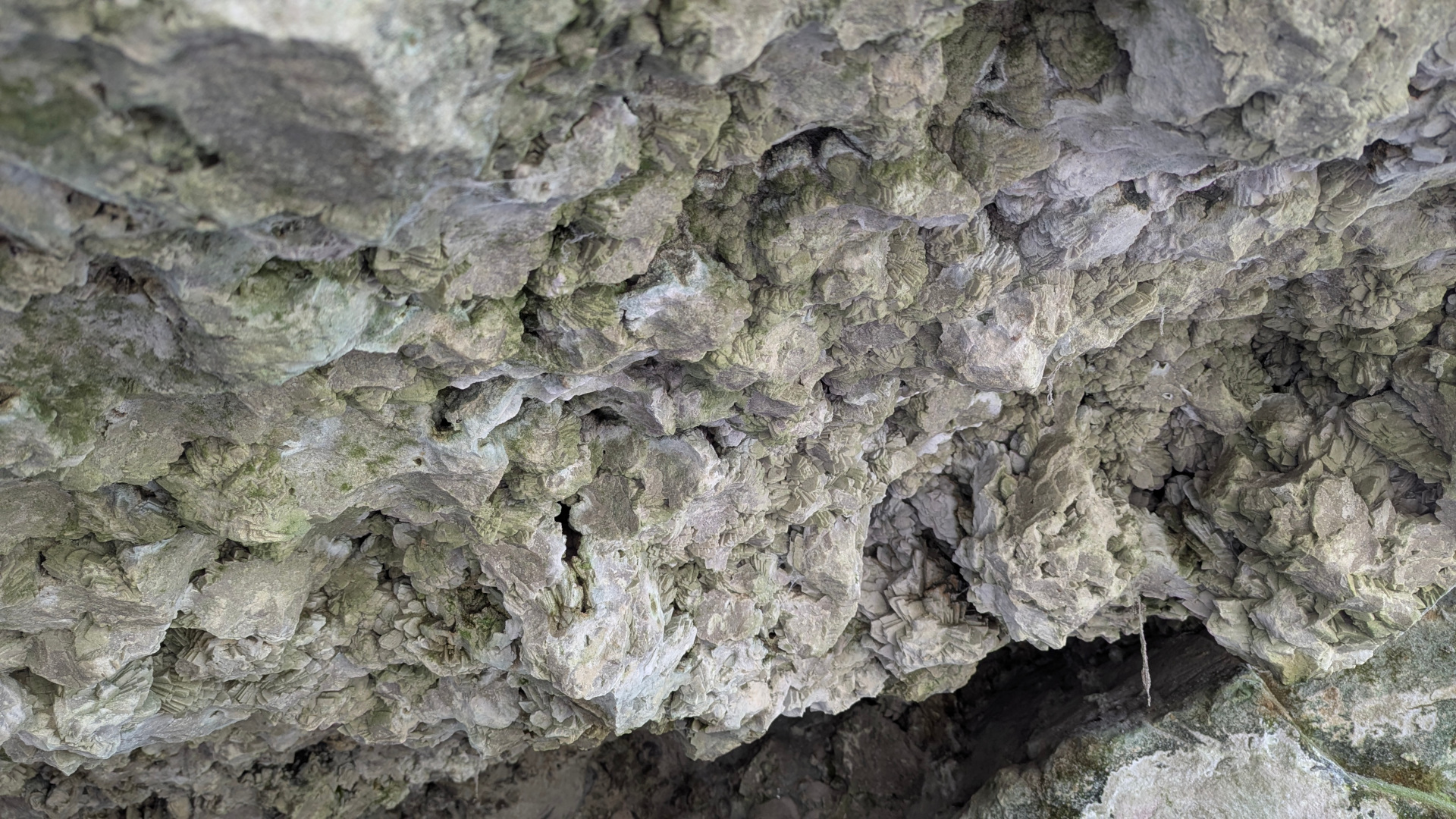
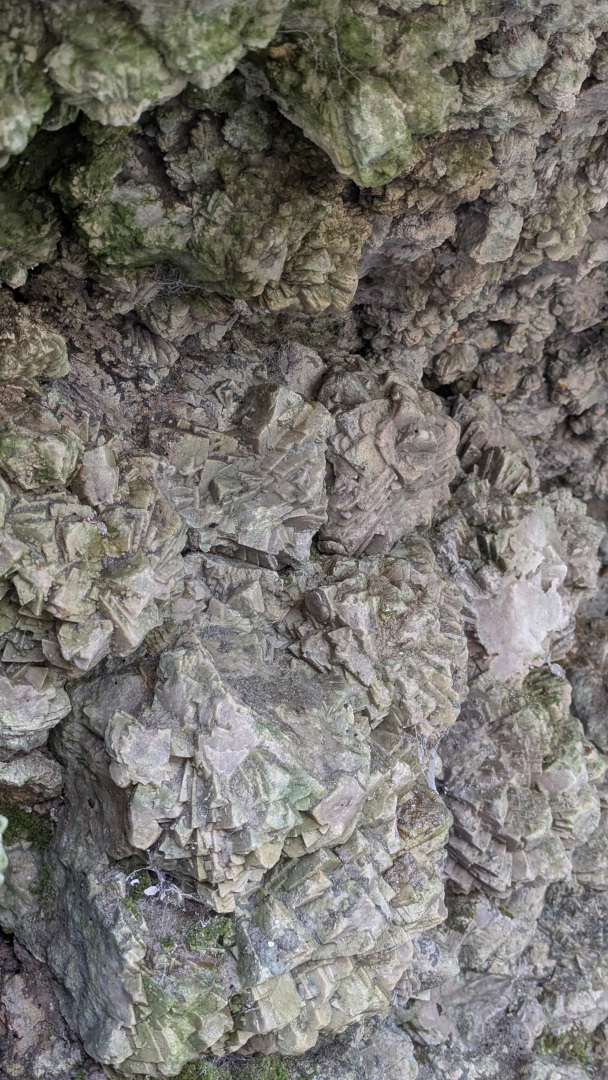
Under specific conditions, silica-rich water circulated through cracks in the sandstone. Over long periods, silica deposits crystallized into quartz formations, sometimes visible to the naked eye.
These crystallizations give the cave its distinctive appearance:
- sparkling mineral surfaces
- small geometric crystals embedded in the rock
- light-colored formations ranging from white to slightly bluish tones
This type of quartz crystallization is very rare in the Île-de-France region, making the cave a valuable geological site.
History
The cave was first discovered in 1775 by a quarry worker named Laroche, who noticed crystals in the Saint-Germain rock formations.
According to local poet and carpenter Alexis Durand, the discovery created such excitement that King Louis XVI reportedly came to Fontainebleau to see the crystals, and quarry workers presented him with a collection.
The cave was rediscovered in 1850 by a laborer named Benoît. Shortly afterward, a local baker named Chenu informed the public about the find, attracting large numbers of curious visitors.
Durand described the cave in October 1850 as a space of about 70 square meters, where:
- arch-like formations linked different spaces
- the ceilings were covered with hanging crystallizations
- mineral formations displayed geometric shapes such as rhombohedrons and parallelepipeds
Unfortunately, visitors quickly began removing pieces of stalactites and crystals, causing damage.
To protect the site, the forest administration and local authorities closed and filled the cave with debris, and it gradually disappeared from forest guides.
Scientific Interest
The rediscovery sparked scientific attention in the mid-19th century.
In June 1851, the geologist Constant Prévost visited the cave with around fifty students. Soon after, the French Academy of Sciences sent geologist Léonce Élie de Beaumont to examine the site and prepare a report.
Excursions were organized to the cave, including one led by the famous Fontainebleau trail pioneer Claude-François Denecourt. However, by that time the cave had already been sealed to prevent further damage.
Restoration and Reopening
At the end of the 19th century, Charles Colinet, who continued Denecourt’s work of developing the forest’s walking routes, rediscovered the cave.
He cleared and restored the site and installed a protective metal gate at the entrance.
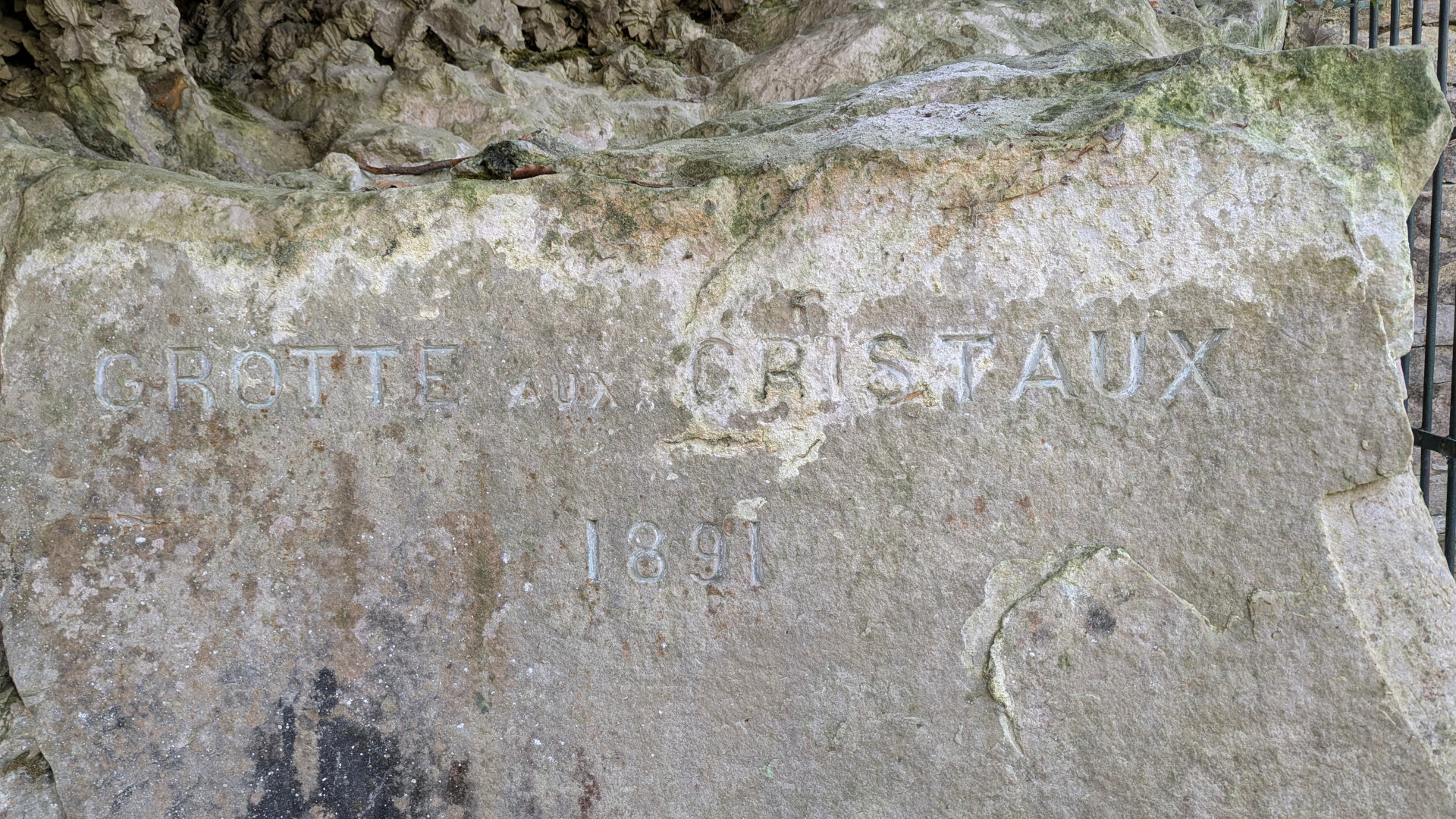
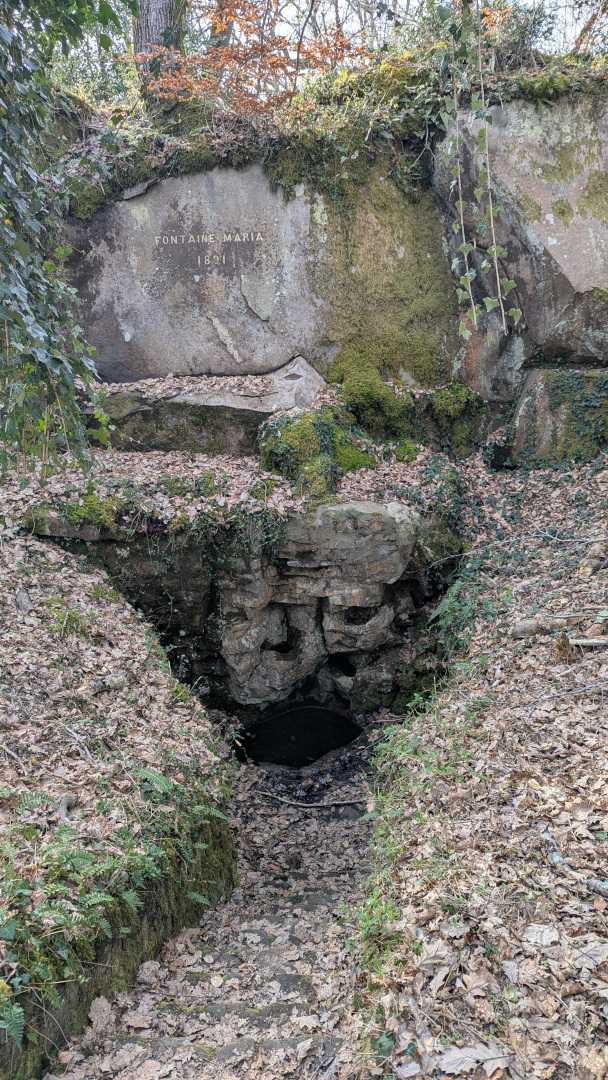
The cave reopened to the public on March 29–30, 1891, attracting many visitors from both Fontainebleau and Paris. Among them were notable figures such as:
- physician Paul Brouardel
- architect Charles Garnier, designer of the Paris Opera House
Visiting the Crystal Cave Today
The Crystal Cave remains a hidden landmark within the vast Fontainebleau Forest.
Important things to know before visiting:
- Access inside the cave is not permitted — the entrance is protected by a gate to preserve the crystals.
- Visitors can observe the entrance and glimpse the mineral formations through the bars.
- The surrounding terrain consists of sandy trails and rocky areas, so sturdy walking shoes are recommended.
- Parking is available in designated forest areas, though the region can become busy during peak seasons.
Best Time to Visit
The most enjoyable times to visit are:
Spring – mild weather and vibrant forest scenery
Autumn – colorful foliage and comfortable hiking conditions
Many visitors combine the cave with longer hiking routes through the Mont-Saint-Germain sector, exploring other viewpoints and rock formations along the way.
Though small and largely unseen, the Crystal Cave remains one of the most intriguing natural curiosities of the Fontainebleau Forest.
Gallery